BLACK.2
15 November - 20 December 2025
Tara Denny
Nick Devlin
Paul Handley
Mark Hislop
Suzie Idiens
Stephanie Jook
David McBurney
Vincent Ward
Alex Walker
Oliver Wagner
Wei Weng
The colour black is not treated as pigment, but as proposition—an active and generative field through which artists engage material, image, and idea. Continuing the dialogue initiated by Void_Melbourne’s 2023 exhibition Black, this new iteration extends the investigation into black as both concept and condition: how it absorbs, resists, and transforms meaning across media and time.
Within the exhibition, black is a site of both compression and expansion. It draws forms inward, toward density and silence, yet also opens outward into immensity—into the unseeable, the unspoken, the infinite. In the hands of the participating artists, black becomes surface, sound, language, and light; it is lacquer, film, pigment, and screen. Each work operates within this paradox: black as void and as fullness, as concealment and revelation.
Black carries a history that is visual, cultural, and political. It is the colour of mourning and resistance, of erasure and assertion. In the context of contemporary practice, black functions as a critique of visibility itself—what is shown, what is hidden, and who decides. For some artists, it manifests as a meditation on loss and opacity; for others, as an act of radical presence. It asks us to consider black not as the end of light but as a ground from which new forms of perception and relation might emerge.
Philosophically, black gestures toward the infinite and the unknowable. It resonates with the space of imagination—where meaning is not fixed but continuously negotiated. Black.2 invites viewers to dwell within this tension: between material and immaterial, between what can be sensed and what remains beyond sight.
In this exhibition, black is not absence, but condition. It is a mode of thinking, of making, of being with. It holds within it the contradictions of our time—the saturation of image and the desire for stillness, the visibility of bodies and the persistence of their invisibility. Black.2 traces these currents, revealing black as both limit and beginning: a field where perception deepens, and where the possibility of seeing anew remains open.
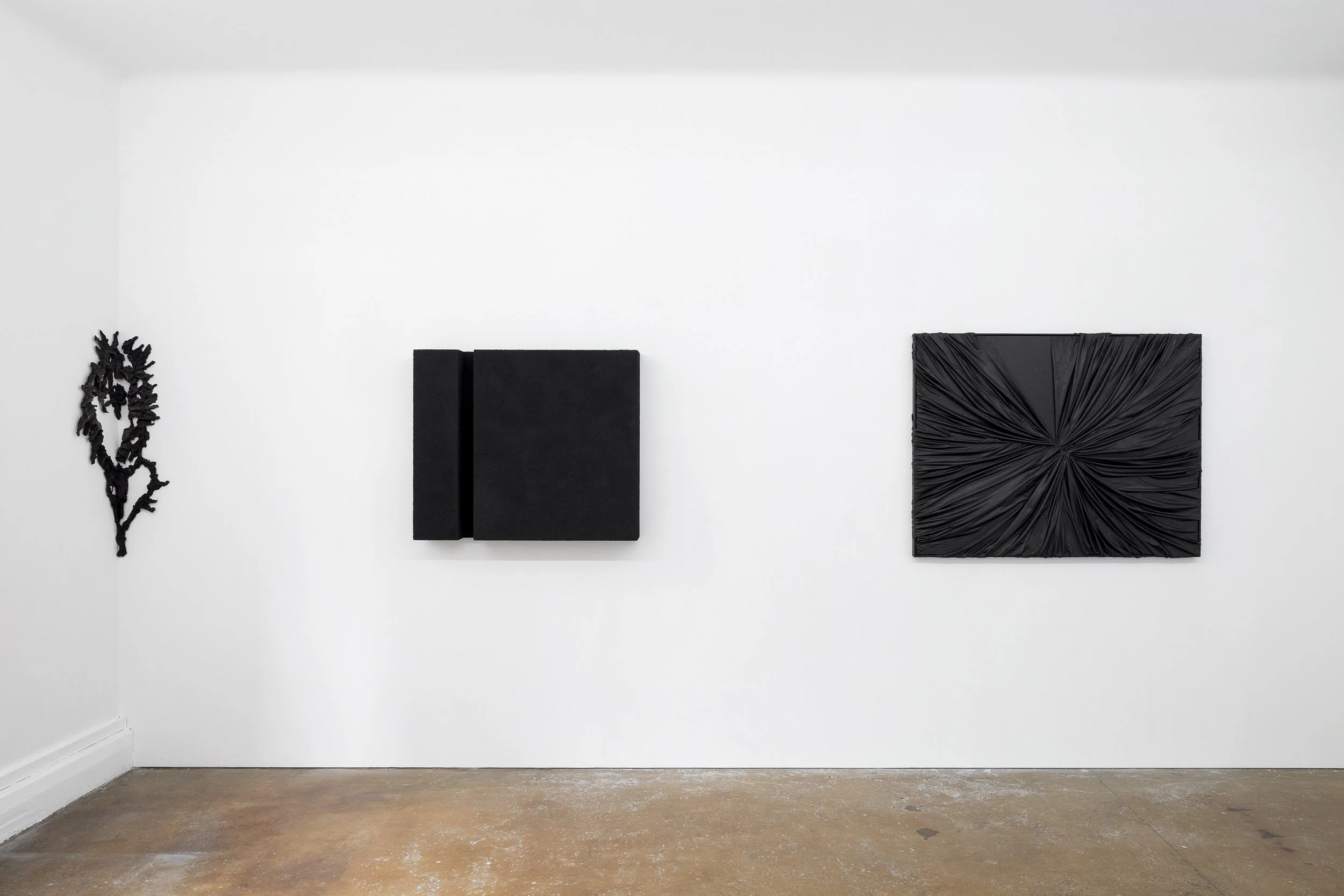
Tara Denny | Suzie Idiens | Stephanie Jook | Void_Melbourne | Photo: Andrew Curtis Photography

Wei Weng | Alex Walker | Oliver Wagner | Stephanie Jook | Void_Melbourne | Photo: Andrew Curtis Photography
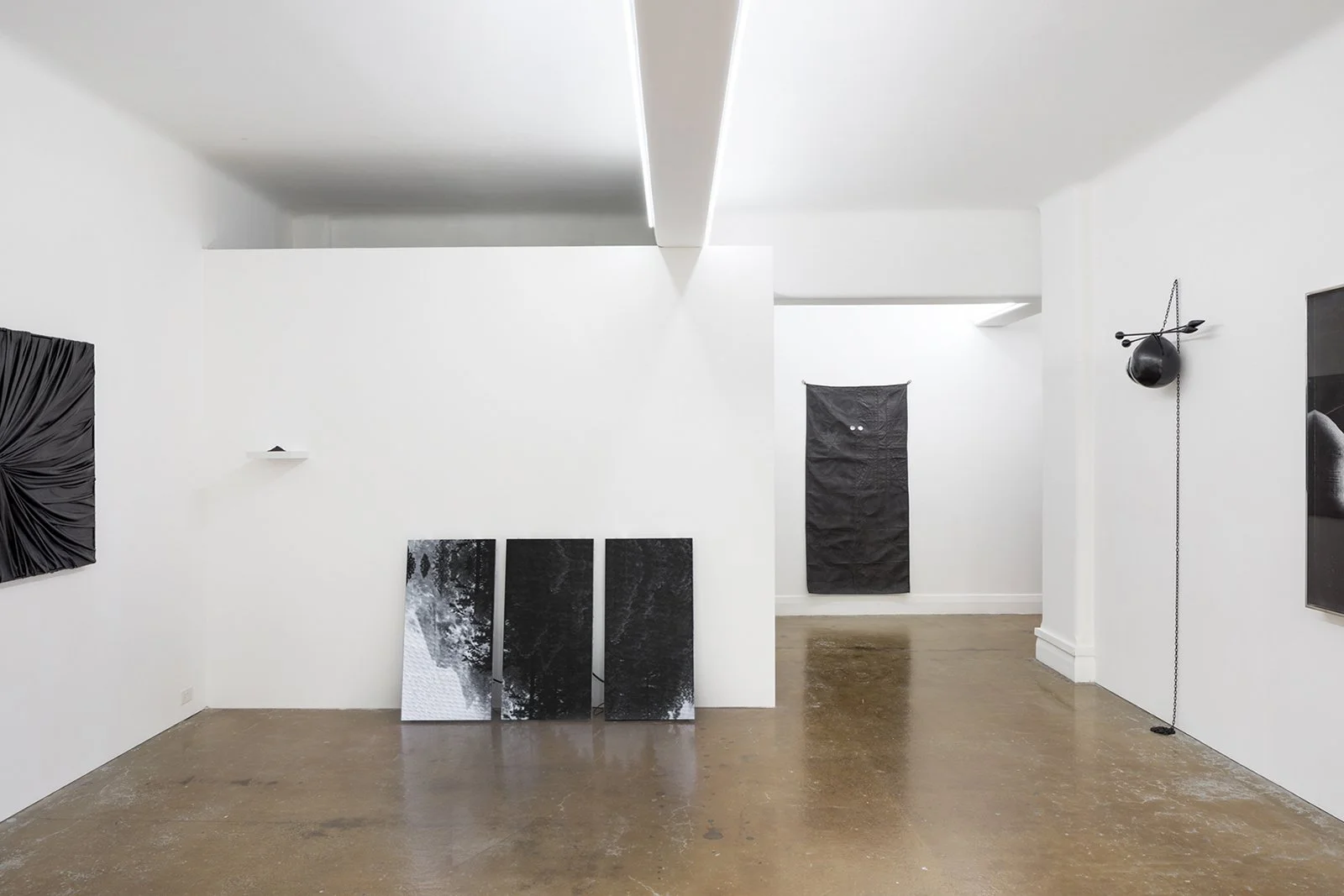
Paul Handley | David McBurney | Nick Devlin | Wei Weng | Void_Melbourne | Photo: Andrew Curtis Photography
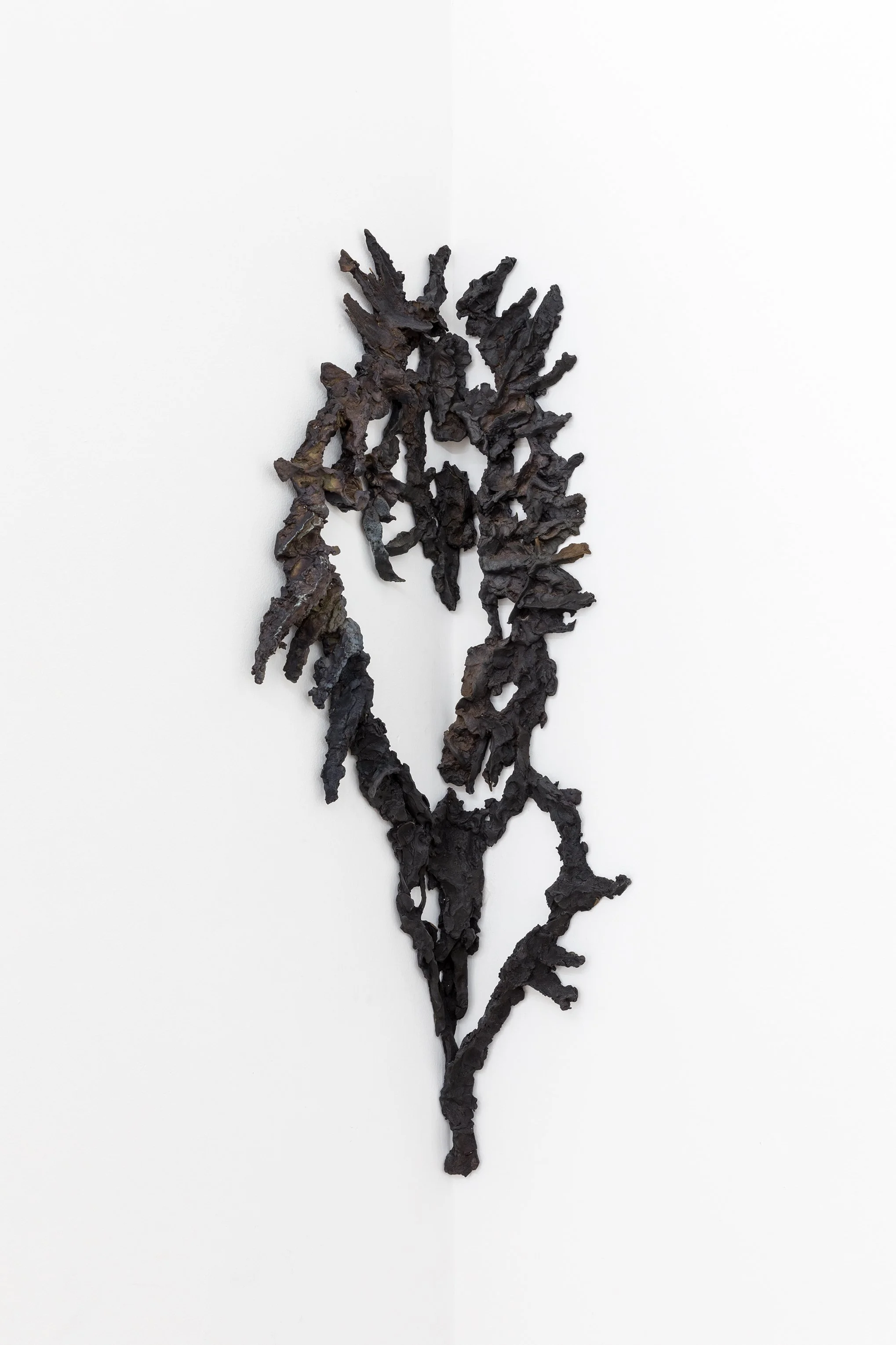
Tara Denny | Rogue Allure 2025 | Bronze, black patina | 104 cm x 23 cm x 33 cm
Tara Denny marks with her hands literally on the wall, a mouth, a kiss insisting that ‘our’ voices will not be silenced. Open wide or closed this is not an abstraction this is a narrative using the mouth as an expression of protest for reclaiming one's body autonomy and acts of women’s resistance. ‘Rogue Allure’ is an expression of the mouth, one of our most sensual speaking parts our body has as a tool for bodily protest where words, sound, poem, song pour out from.
Rogue Allure
To feel alive and recall what it’s like in a moment, wiping off one’s lipstick stain with your hand onto your silk sleeve,briskly disgusted and eh strange. Moving onto the next thing as fast as I can describe what is a stream of automatic consciousness ‘what is a philosophical fuck painting and how does it feel’ look and observe I can’t explain to you everything…my hands and body merge as one melting into the wall, lean in to apply for sigh…sigh for a rogue memento. I named it after my lipstick.
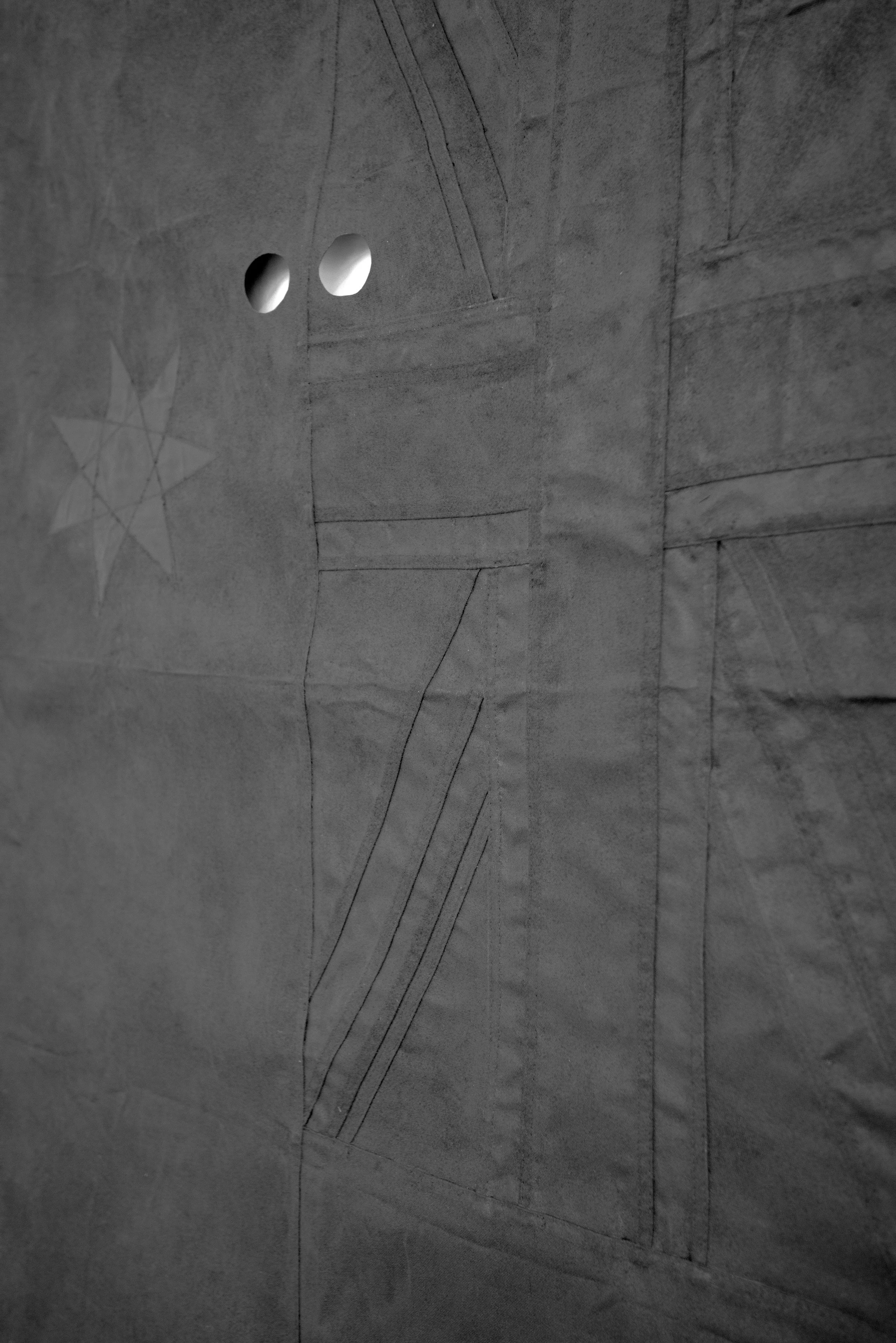
Nick Devlin | Last Refuge, 2025 | Acrylic polymer paint on canvas flag | 180 x 90 cm
Last Refuge takes its title from the well-known adage, “Patriotism is the last refuge of a scoundrel.” The sewn Australian flag is redacted—its colonial iconography erased—challenging conventional representations and the narratives they uphold. Hung in an unconventional orientation, with two eye holes cut into the fabric, the flag becomes a mask: a means of concealment and complicity. A figure hides behind it, suggesting both anonymity and accountability, and prompting viewers to consider the ways symbols can be weaponised or subverted. This piece was created in response to recent social and political events in Melbourne and globally, reflecting on identity, national mythologies, and the role that visual culture plays in shaping collective memory.
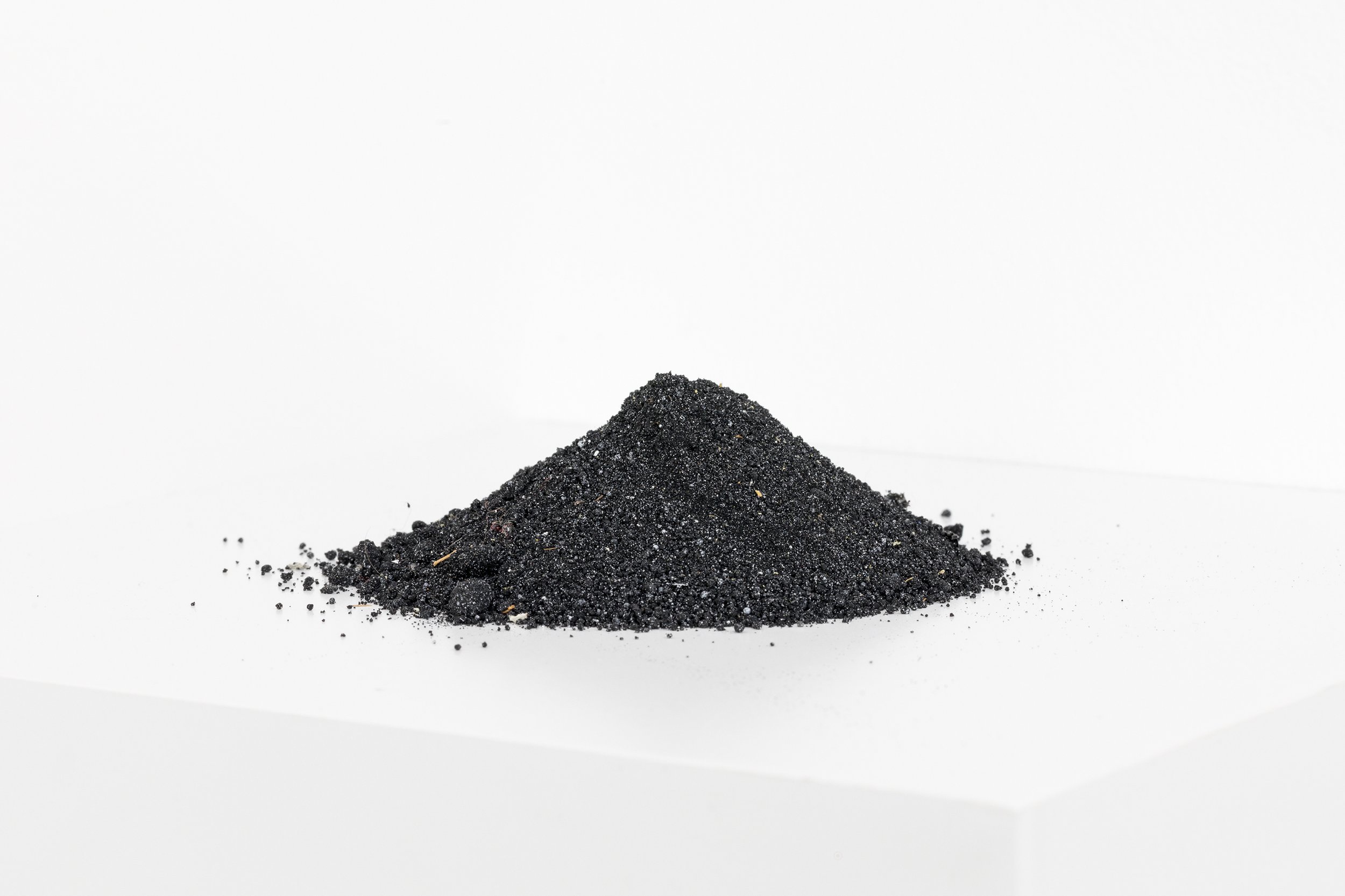
Paul Handley | Sol LeWitt Dust | polymer paint dust | 6 x 6 x 4 cm
NFS
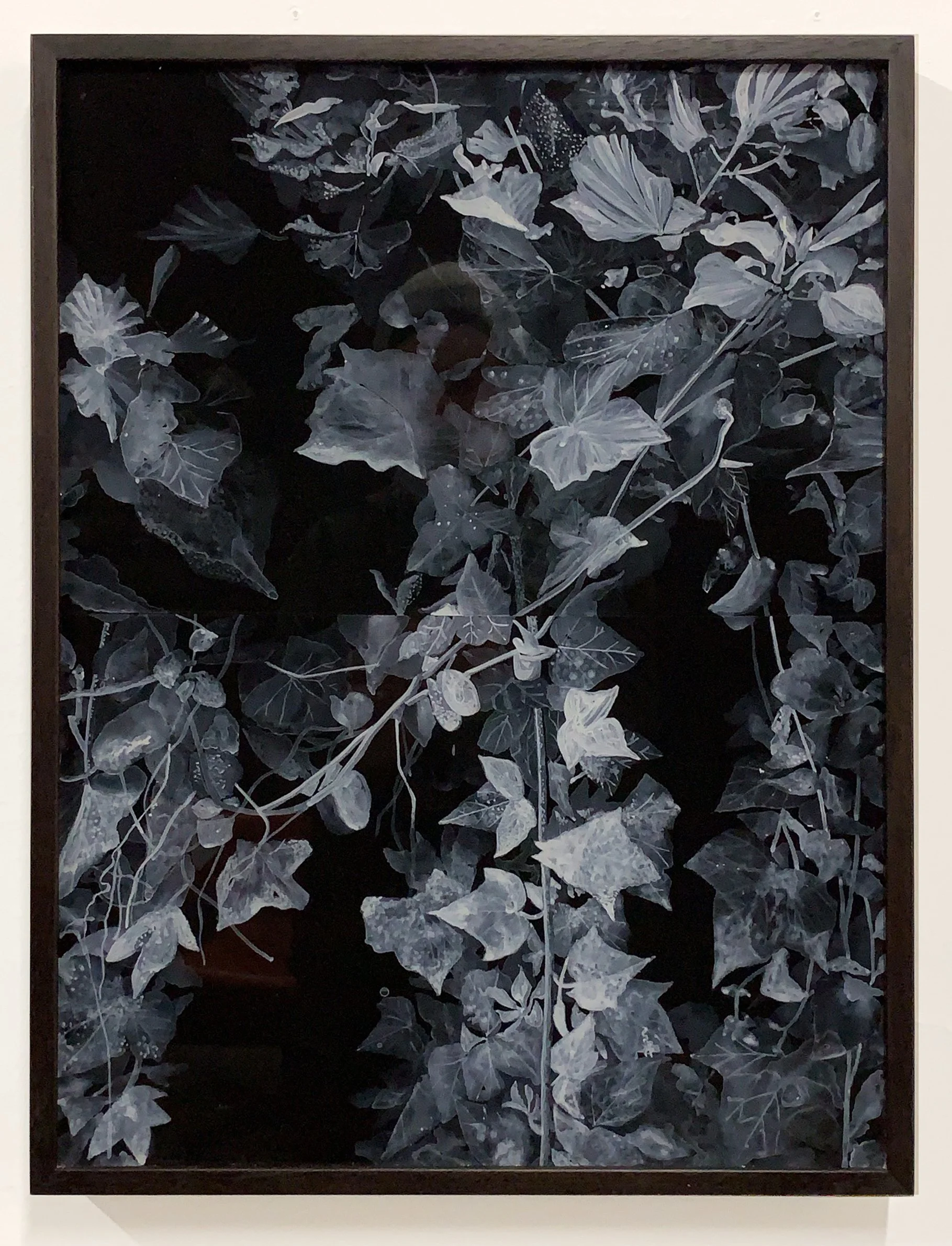
Mark Hislop | it's easier to imagine an end to the world than an end to capitalism | Synthetic polymer paint on acrylic sheet | 54 x 40 cm

Suzie Idiens | Untitled #8 2014| MDF, mixed media | 85 x 100 x 15.5cm
Black.2 at Void_Melbourne includes Untitled #8 from Suzie Idiens’s All Things Being Equal series, in which it could appear that Idiens emulated the scientist’s aspiration to a singular certainty to see how a geometric form functioned when painted with a single colour that announces the absence of colour. Black, absorbing of light and concealing of form, is the constant element in all of the works from this series.
And yet in Idiens’s hands black is not only a colour but a substance, and a variable one at that. Her blacks include a matt finish, contained and neutral; and a textural formulation of paint that is gritty, final and impenetrable. Each paint application is applied to its designated form through a painstaking process in which the hand disguises its own trace, leaving a seamless object that may appear to have been industrially fabricated, but is deliberately tactile, carefully individuated and receptive to the observer’s contemplation. Far from closing off associations to render all things equal, these works come alive in the extended moment of the observer’s perception.
Suzie Idiens’s work of the last several years has been an ongoing investigation into the question of how a simple, wall-mounted object can possibly convey or invite emotion. She is occupied by decisions about the form, composition and colour(s) of the object, and frequently finishes the object with a painted surface in which the observer meets their own reflection. She intends an experience in which the observer perceives their relatedness to the object in its surrounding space.

Stephanie Jook | R & R: PO | Mixed media | 132 x 100 x 6 cm
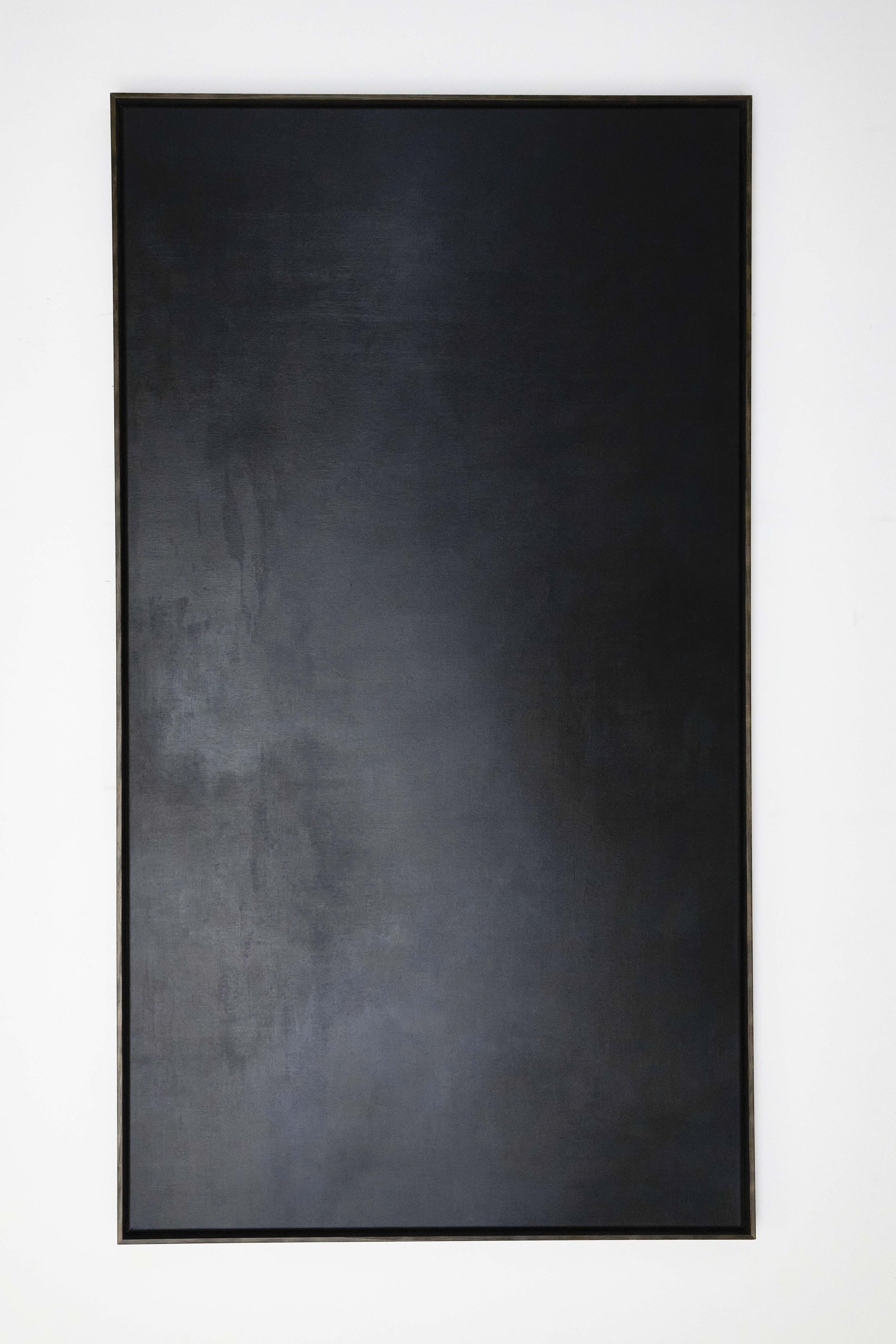
Stephanie Jook | CS: PO | Oil on canvas | 142 x 785 x 4 cm
With underlying themes of reflection and connection at its conceptual core, Stephanie Jook shares a collection of works inviting a deeper introspection on how we engage, interact and perceive our internal and external worlds. Through using a combination of monochromatic tones, coarse textures and sculptural elements which evoke a sense of movement, a material mapping draws upon the interrelation between light and dark, the oscillating and stagnant, the push and pull of our passage of time.
Living and working in Melbourne, Australia, Stephanie Jook is a contemporary artist, conceptually driven by the emotive result within monochromatic abstraction. Since graduating with a Bachelor of Fine Art from RMIT in 2022, she works intuitively incorporating methods of painting and sculpture in her practice. Embedding experience through mark making and materiality, Jook produces works that solidify and represent the power and strength of vulnerability and fragility through opposing visual elements and material matter.

David McBurney | A Mountain is once again a Mountain 2024 (diptych) Screenprint diptych on wood with aluminium subframe, each 102 x 70 cm
A Mountain is Once Again a Mountain presents a misty, scrolling mountain view. The view is shared across three digital LED panels, and also on a diptych of glassy, hand-pulled screen prints.
Part of a larger investigation into digital transfers of memory, identity and belonging, these media combine experimental print processes with heritage craft techniques to explore how contemporary information has recently evolved to become mechanically boundless and difficult to perceive.
The title of this work references a Zen teaching that describes how perception can arise in different forms: understanding, confusion, and realisation.
In the beginning, mountains are mountains and waters are waters; then, mountains are no longer mountains and waters are no longer waters; finally, mountains are once again mountains and waters once again waters.

David McBurney |A Mountain is once again a Mountain 2024 (moving image) Looped image on 3 LED panels, each 100 x 50cm
POA

Alex Walker | Manual Distortion I 2023 | archival inkjet print with bespoke polished steel frame | 130 x 90 cm
Manual Exposure was born from a desire to challenge both the meaning and representation of an ‘ideal photograph’. Using instructional images from analogue photography manuals, which give examples of ideal lighting, exposure and subject, I manually manipulated the images during the process of exposure. Using haptic movements in tandem with the lens to create organic abstractions. I deliberately interrupted the photographic process which is intended to duplicate and represent, instead re-interpreting both the meaning and visual language of these suggested ‘ideal’ images. The resultant works reflect on the temporal nature of photography and its ability to capture more than just what is in front of the lens.

Vincent Ward | Bird in a room & Horses in loom | Video
Horses in Loom
In the small Tūhoe Māori community of Waimana Valley, a narrow gravel road threads through the surrounding ranges. At night, horses roam the road freely. Occasionally a collision reminds residents that these are living creatures - yet most nights they move unhindered, crossing the thresholds of what would normally be boundaries set by humans.
Among locals, some see them as kaitiaki — spiritual guardians, the embodied presence of ancestors whose bond to this valley is too strong to let them leave.
Along with Bird in a Room these videos seen together talk of human brevity and the space left behind,
Bird in a room.
A bird trapped in a room, bounces from corner to corner.
“Out of the dark the sparrow
flits through the banqueting-hall,
a candle’s warmth upon its wings;
then vanishes again
into the dark from which it came.
So brief our knowing.”
(Levertov echoing Bede)
“The Door Was Open and the House Was Dark. A quick bird crosses the room of light. The air remembers the flight.”
(Seamus Heaney echoing Bede)
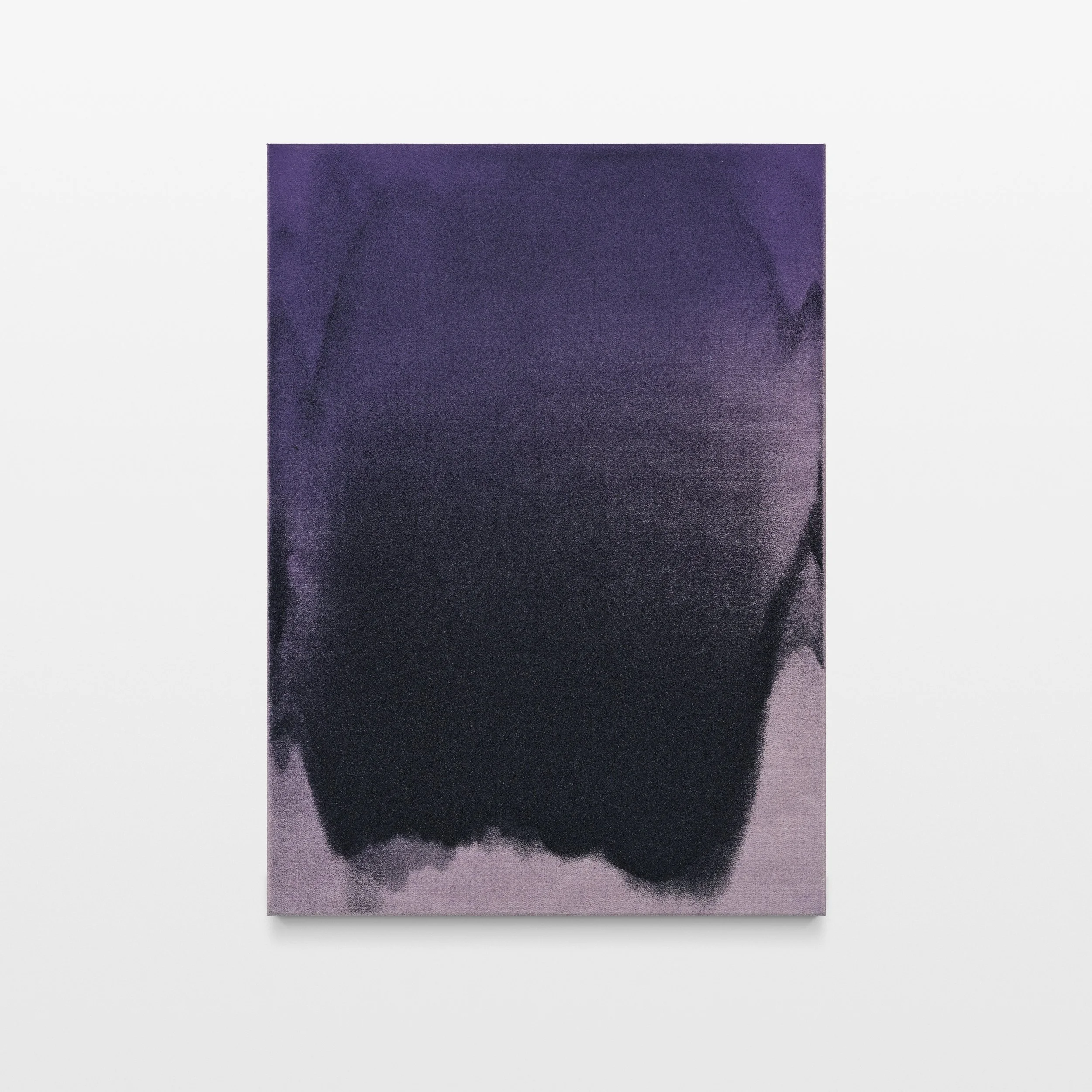
Oliver Wagner | Reconstructed painting 84 | house paint on linen | 91 x 66 cm
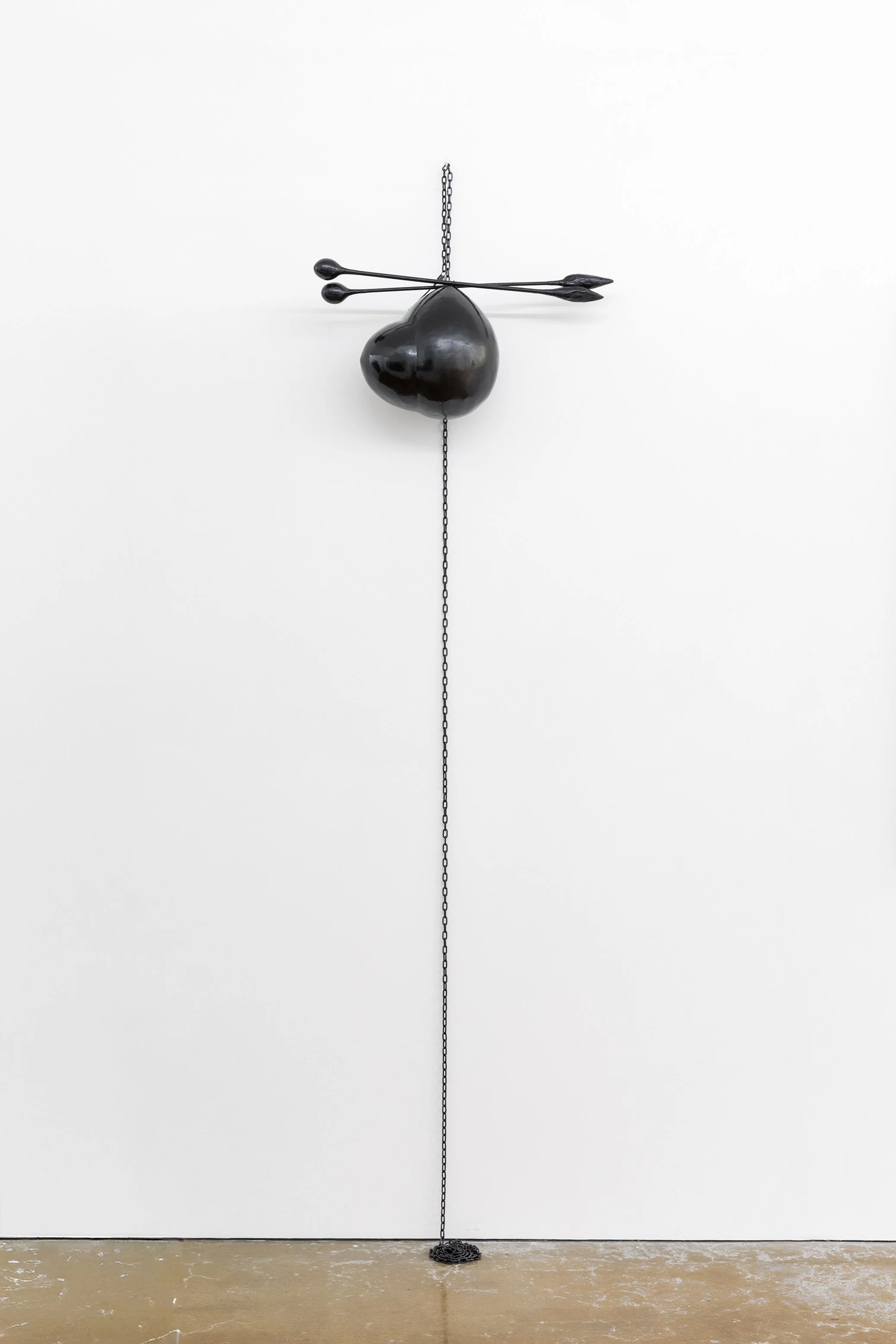
Wei Weng | Heartfelt Void, 2025 | Urushi lacquer, ash, wood, stainless steel chain, dimension 200 cm x 80 cmx 80 cm
My urushi lacquer work always begins with a phase of profound black. This flawless, pitch-dark foundation is essential, both as a canvas for subsequent decoration and as a deep well of inspiration. It is within this darkness that I conceive of transforming humble materials—eggshells, balloons, plastic bottles—preserving them within the urushi to create relics for the future.
Wei Weng
Born in China and now based in Melbourne, artist Wei Weng is known for using photography, lacquer installations, and speculative text to explore sensory connections between nature and memory. Holding an MFA in Painting from the California College of the Arts (2005), her work has been exhibited in international galleries in cities such as Kyoto, Rome, and Melbourne. She was nominated for the Leica Oskar Barnack Award (2023). Her recent projects Museum of Lost Heirs (2026) and Air Hunter (2024) challenge the liminal and poetic borders of storytelling.