On Iridescence
30 July - 22 August 2026
Evelyn Dinham
Devin Farrand
Paul Knight
Thom Lowry
Allan Mitelman
Curated by Donald Holt
Paul Knight appears Courtesy of Neon Parc
Allan Mitelman appears Courtesy of the Estate of Allan Mitelman.
Radial View
The tension between surface and substrate is not one merely of tooth or traction. The oppositional nature of the parings provides opportunities to question the alliance of these materials. Coarse linens to unctuous oils. Lacquer to timber. Steel plate to oxidizations.
The subject is broad and the iterative connections demand exponential examination. To corral the subject this exhibition is a type of research where the central question of Iridescence is a hub for many spokes of practice. Whether it be medium, process or epoch, each ray provides a differing possibility for dialogue between surface and substrate.
Iridescence appears throughout the natural world in many forms. In the shifting, flickering skin of the octopus or in the dazzle camouflage of fish scales, which alters shape and colour as a viewer or predator approaches. Repeated in the beetle’s illusion of toxicity. These effects serve different functions, from defence to attraction, and vary in method and surface quality. Yet they share a common trait as illusion of a liquid, mercurial volume is produced by a surface remarkably only microns thick.
The venture is thinner than skin. Take for example the oil slick, or the soap bubble, a shimmering spectral phenomenon that dances on the meniscus. It has no tangible substance at a human scale but still, it provides a mesmeric moment. The surface alludes to volume, often falsely. The most pervasive of these is the ever-present screen. This portal is in your hand and in your pockets, on our walls and the location of our workspaces. A laminal quality is highly desirable; however, the surface is one we no longer notice short of a fingerprint or scratch. It provides a constant opportunity to join many worlds it contains.
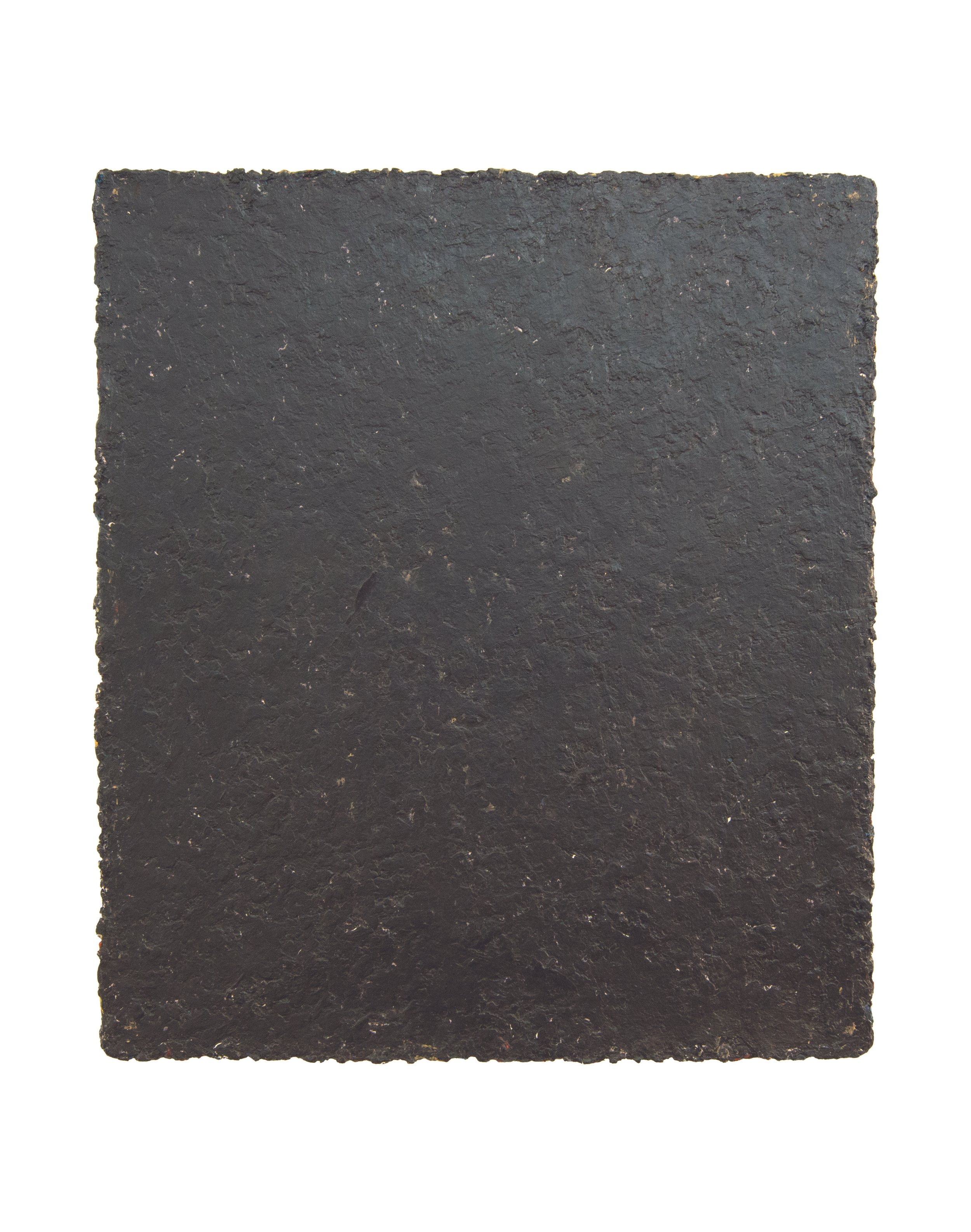
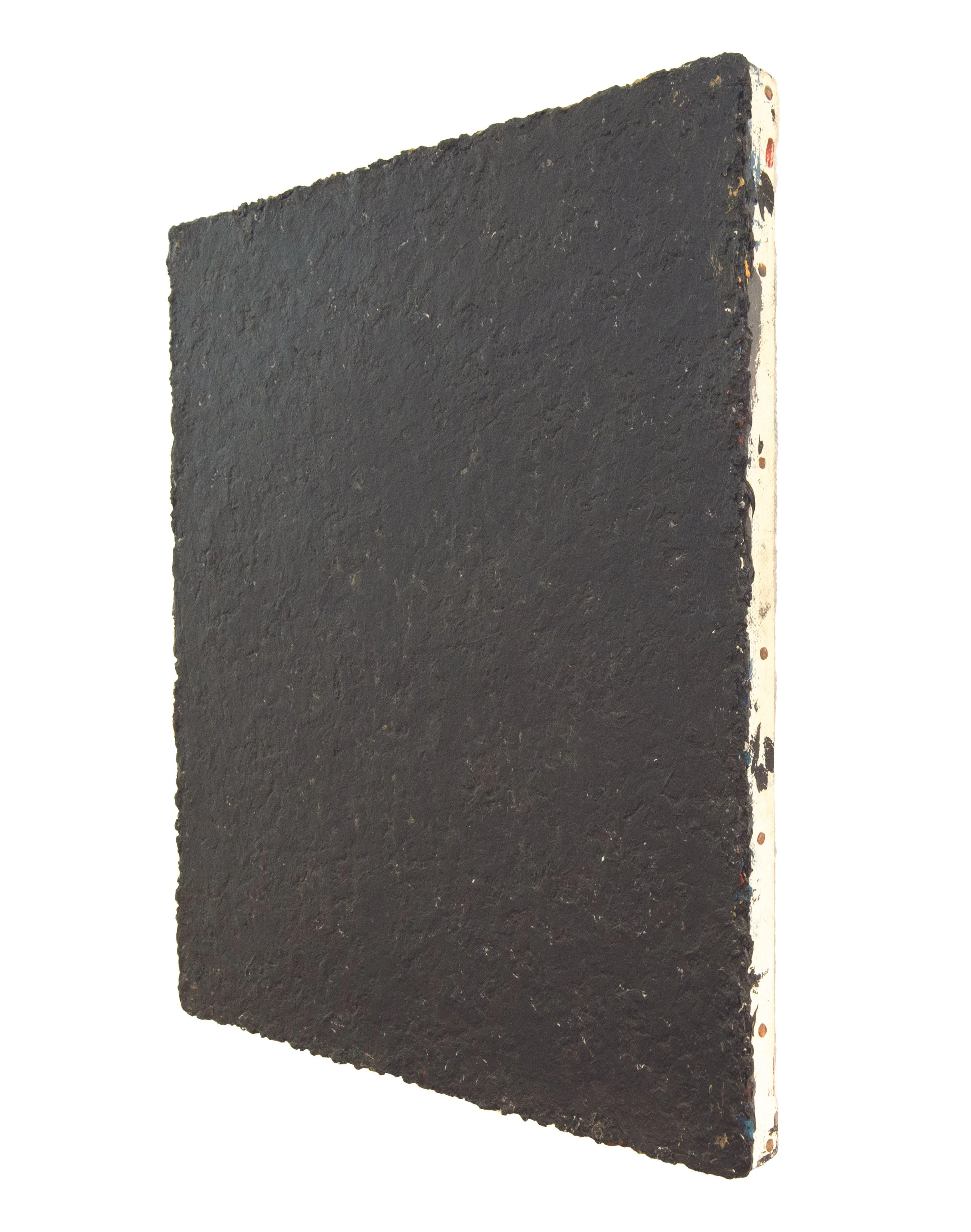
Exemplary of the emersion into the surface, we see the work by Allan Mitelman. An endeavour where closeness to the surface, attention given to applying the emulsion and repetitive mark making are testaments to time and toil. The tilling of the metaphoric soil, then to smooth & to dib over again and again. There is a point where the material of the “image” outstrips the substrate in a physical way. Its boundaries are breached leaving the support as merely that, the paint becomes an independent element.
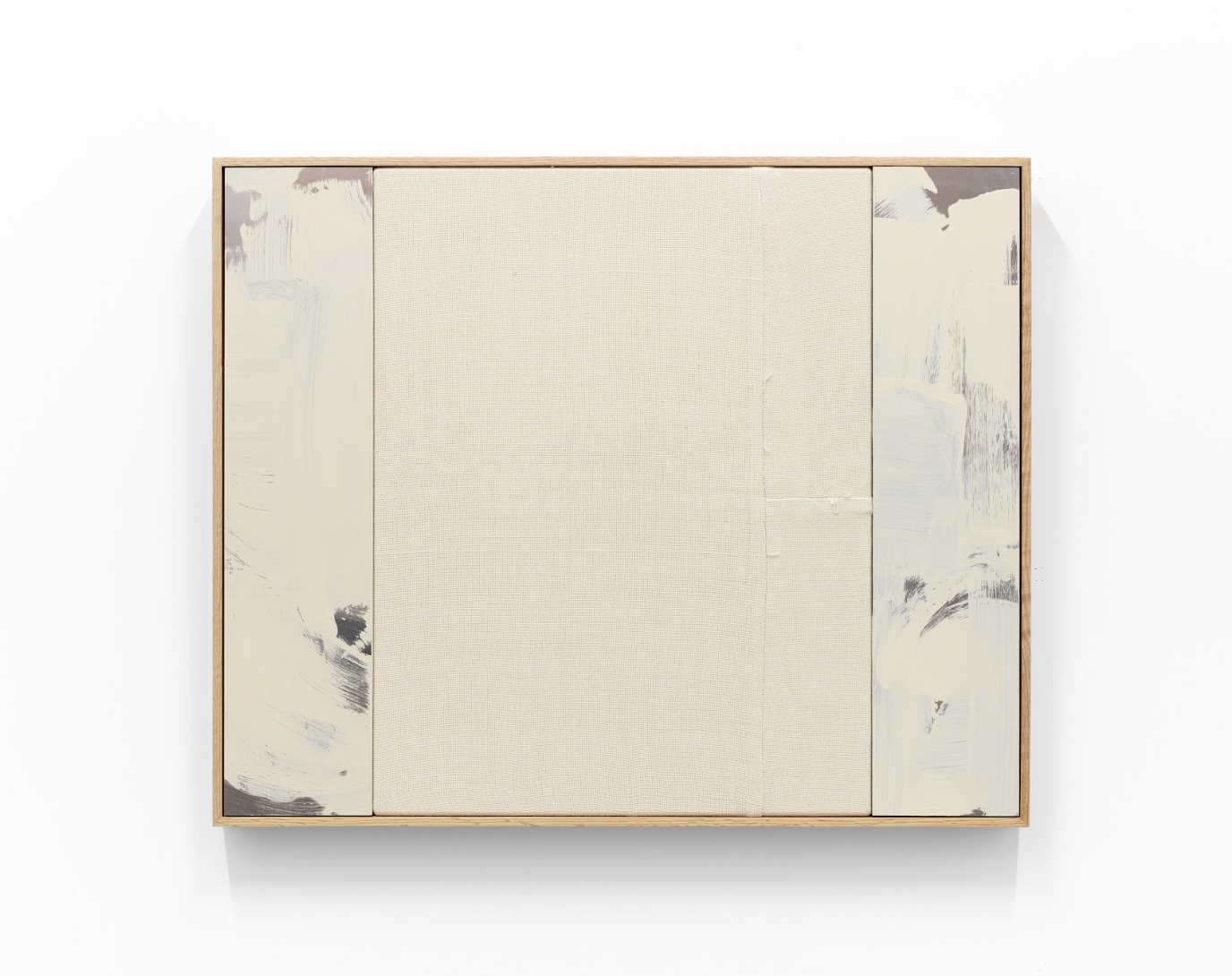
Deep diving into material character is integral to the practice of Thom Lowry. Textiles, woven by him on a small loom are then stretched while flanking mirrored elements wispily veiled in paint are mounted formally on similar stretchers. The compositions seem to gently arrive. The reverse of the work illuminates the care and attention given to the individual parts, each resolved completely before being assembled in the whole. The textural interplay on the surface conceals the planned & constructed physicality of the pieces. Additionally, the mirrored components disperse the surface into a volumetric experience. The mirror capturing the viewer, fixing them in the composition and changing one’s relationship to the otherwise enigmatic assemblage.
Looking into the surface is a daily habit. We use the laminal quality of the screen to project into portals and spaces we now take for granted. The thin space and photographic image are a place where we fall into voyeurism and distanced manipulation. We are close (zooming) and far (scrolling) at once.
At the near point, Édouard Vuillard painted interiors or the most part, but sometimes also gardens. In a few compositions he managed to combine the magic of propinquity with the magic of remoteness by representing a corner of a room, in which there stands or hangs one of his own, or someone else's representation of a distant view of trees, hills and sky. It is an invitation to make the best of both worlds, the telescopic and the microscopic, at a single glance. (1)
Paul Knight’s ‘Chamber Music’ is, among other things, a record of intimacies and the quotidian. These images include the mechanism of production. By including the camera and the subject in a reflection, the position of the viewer flips quickly from observer to subject, disintegrating the fourth wall. The domestic interior of Vuillard is evoked here too. Outside this, photography leaps from memory and the screen into the physical world, not exclusively contained in the digital but more frequently inflected by the many methods of reproduction. Knight’s work is presented through both digital print and the darkroom photographic print. The qualities of each print providing differing sense of address.
Evelyn Dinham finds her material through the print medium also. The city is littered with vinyl prints scaled to billboards and real-estate hoardings. They operate at various resolutions, driven by expediency and designed for fugitive viewing. Once released from their original purpose into Dinham’s hands, they become a malleable film. The reverse is painted, finishing the sheet both sides. The shifting skin with its exposed stratum basale lacquered with vibrant pigment. From here they are wrapped, sliced and folded into foglie and tresses. The remnant images are placed distorted and concealed into the folds with seeming nonchalance, enabling a transition of spatial information from the found photography into a realm of sculpture.
Sentimental lovers of the past complain of the drabness of our age and contrast it unfavourably with the gay brilliance of earlier times. In actual fact, of course, there is a far greater colour in the modern than in the ancient world. (2) Both the screen and industrial processes have increased a proliferation of colour, both consistent and fortified.
Look at the metal plate works of Devin Farrand. The formal qualities of presentation and proportion are resolved. The arrival of the surface is through an oxidation process of yellow chromate or yellow zinc passivation. The colour and pattern produced by the process is quite uncontrollable, and this is encouraged. A process that “has its own weather”. (3) This iridescent treatment while dancing on the surface cannot exist without the reaction to substrate. This seductive shifting surface and the support are chemically bonded yet fused conceptually.
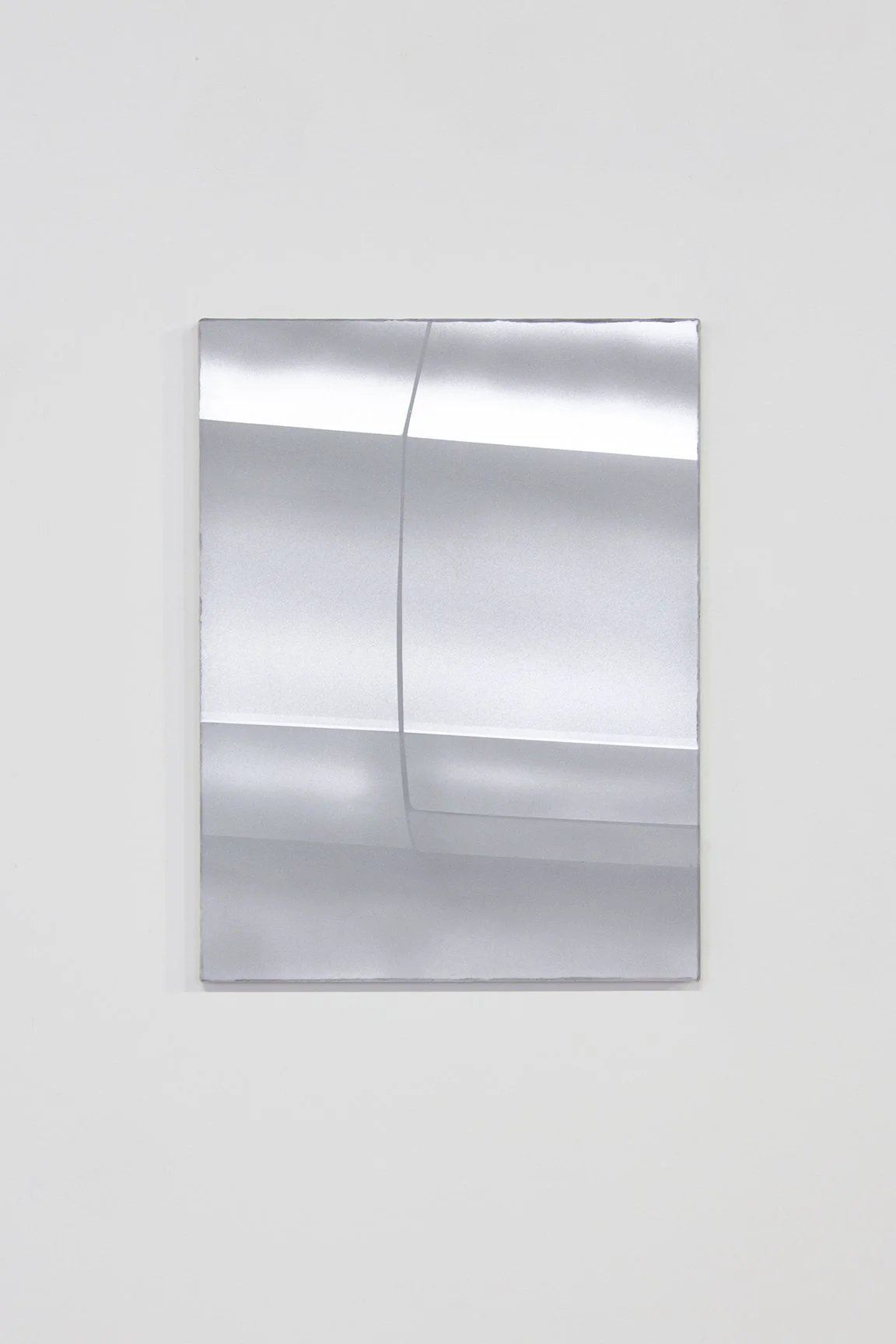
In another work by Farrand, on aluminium, the fine abrasion of the surface provides spatial illusion, dare I say pictorial illusion. Those rich convex reflections, which so fascinated Rembrandt that he never tired of rendering them in paint, are now the commonplaces of home and street and factory. The fine point of seldom pleasure has been blunted. (4).
Farrand’s connection to the automotive is familial, restoring cars with his father at a young age. The images and the technical proficiency with industrial processes gleaned from this experience has not waned. Here the substrate and images are made of the same thing. One surface does not mask another, nor are we led into a space for the reveal of a tertiary process. What you see is all there in the finest of grains.
Through the assembly of this collection of works, each spoke provides its own relationship to the centre. The balance of this wheel reinforced by ever evolving links between each artists’ interests creating a web that is rebuilt with each associative viewing. As the images unfurl, you may well be struck by a sense of equivalence, tantamount to interchangeability. Past and present, traditional and futuristic, local and cosmopolitan, functional and sculptural, conventionally beautiful and purposefully ugly: all these qualities are pounded flat into a single frictionless plane. (5) Yet we see into them more as we experience them collectively, each meniscus reflecting the others brilliance.
Donald Holt
(1) Aldous Huxley, Heaven & Hell (Penguin Vintage Classics 2004),115
(2) Aldous Huxley, Heaven & Hell (Penguin Vintage Classics 2004),73
(3) Devin Ferrand Excerpt of an email to Donald Holt, May 2026
(4) Aldous Huxley, Heaven & Hell (Penguin Vintage Classics 2004),75
(5) Glenn Adamson,Ceramic Momentum: Staging the Object,2019
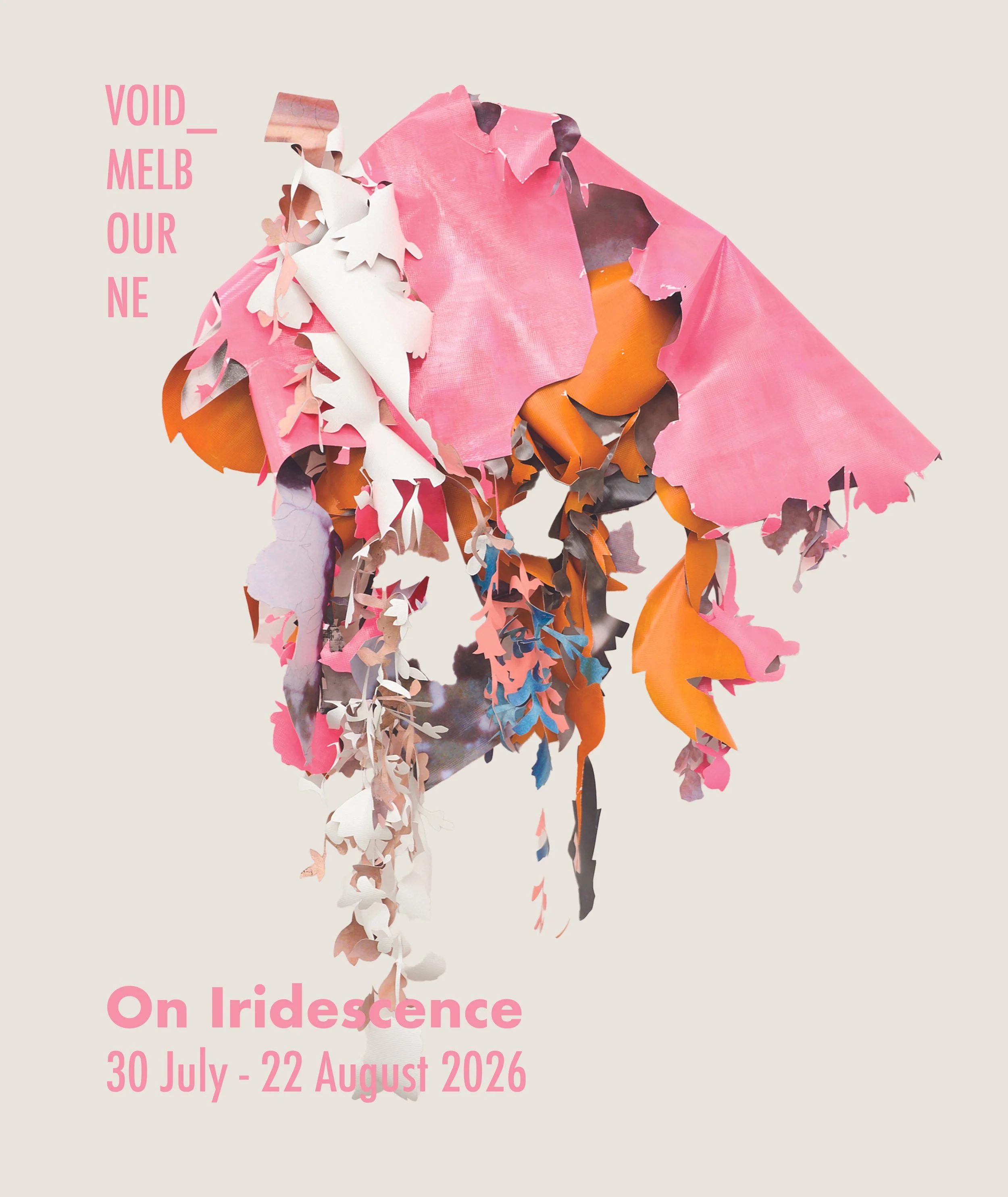
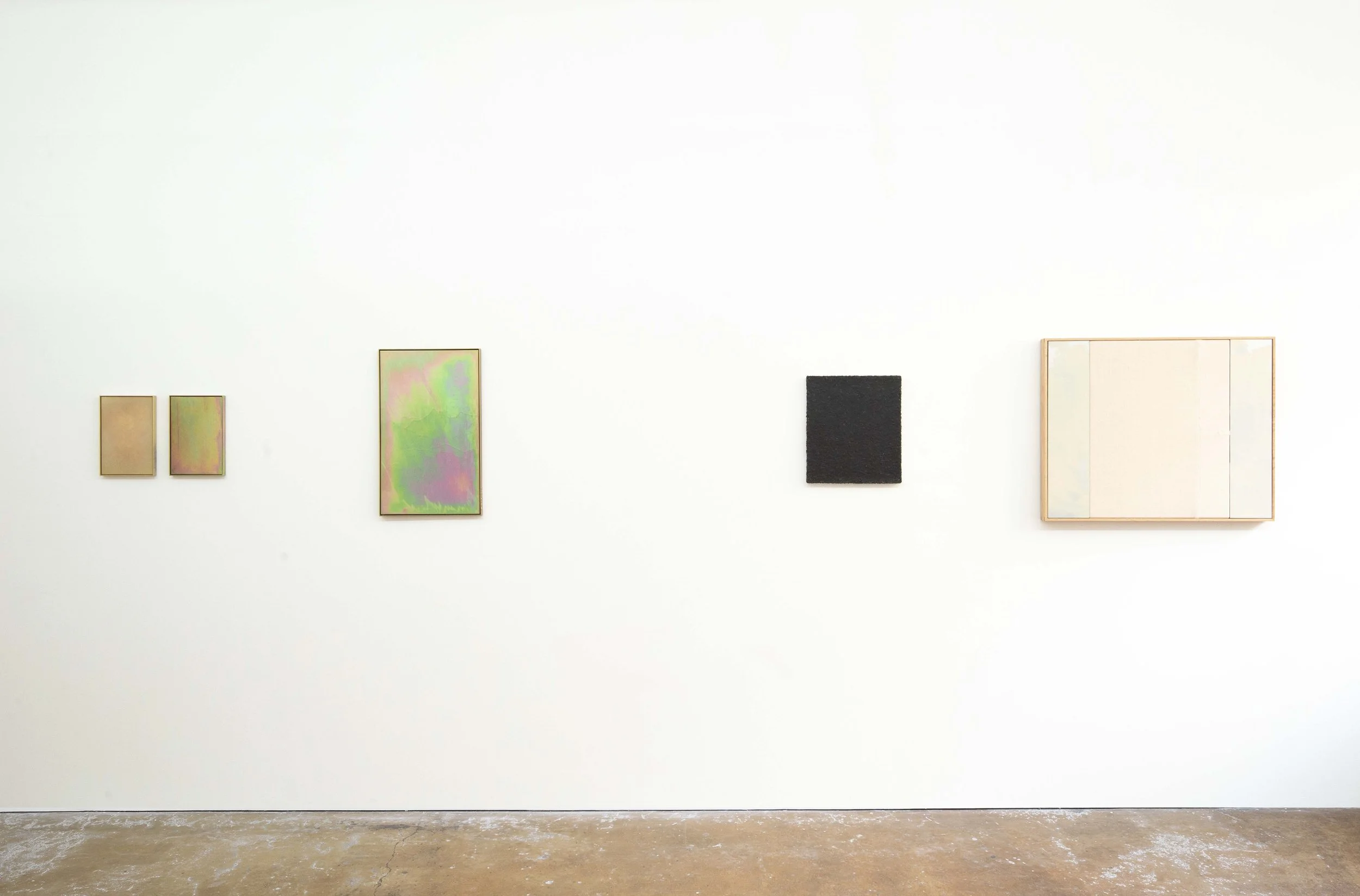
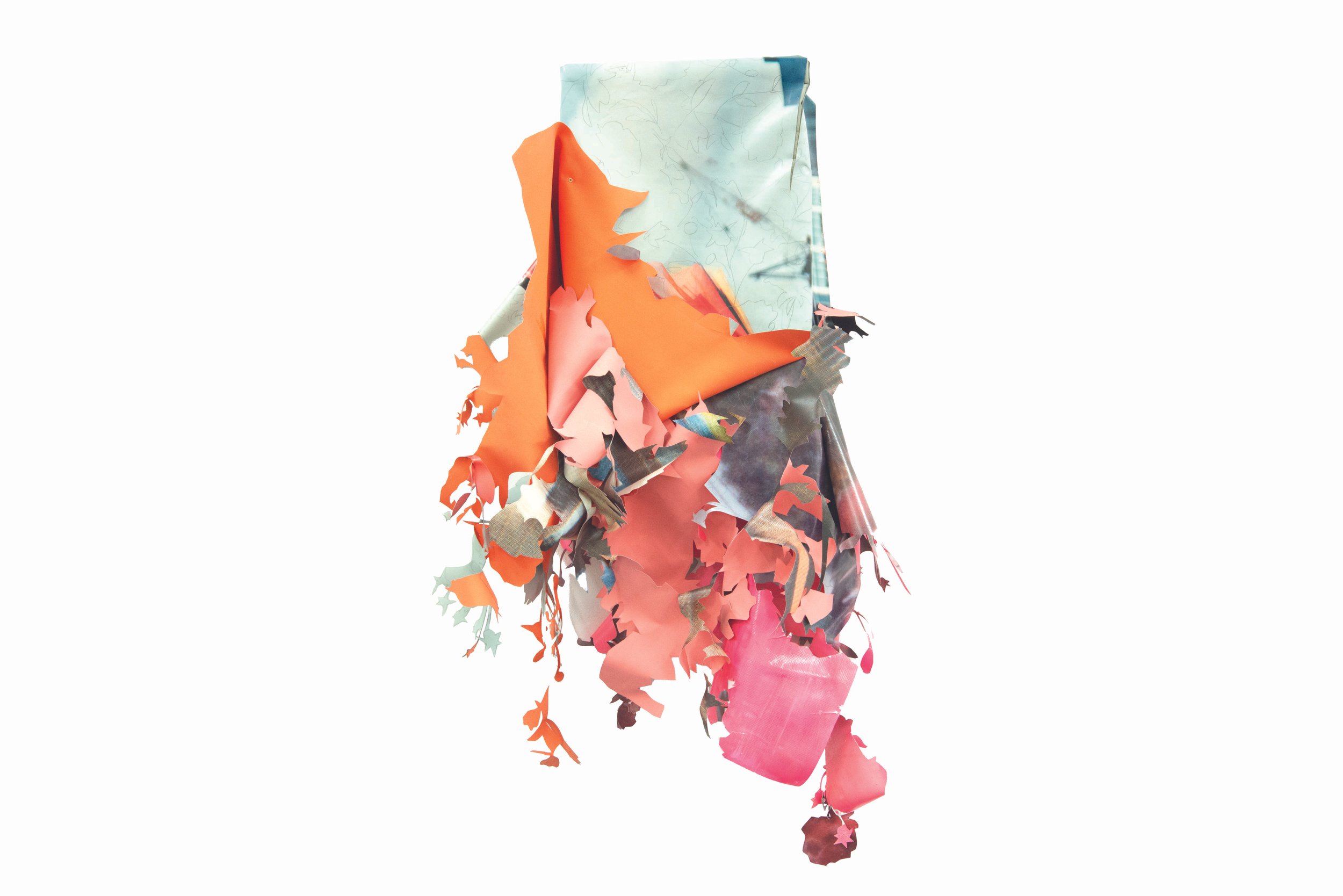
Evelyn Dinham
Untitled ( pink, patrick, autumn, orange, sky ) 2026 . vinyl, acrylic paint, wall paint, PVA glue, graphite, tape . 140 × 94 × 40

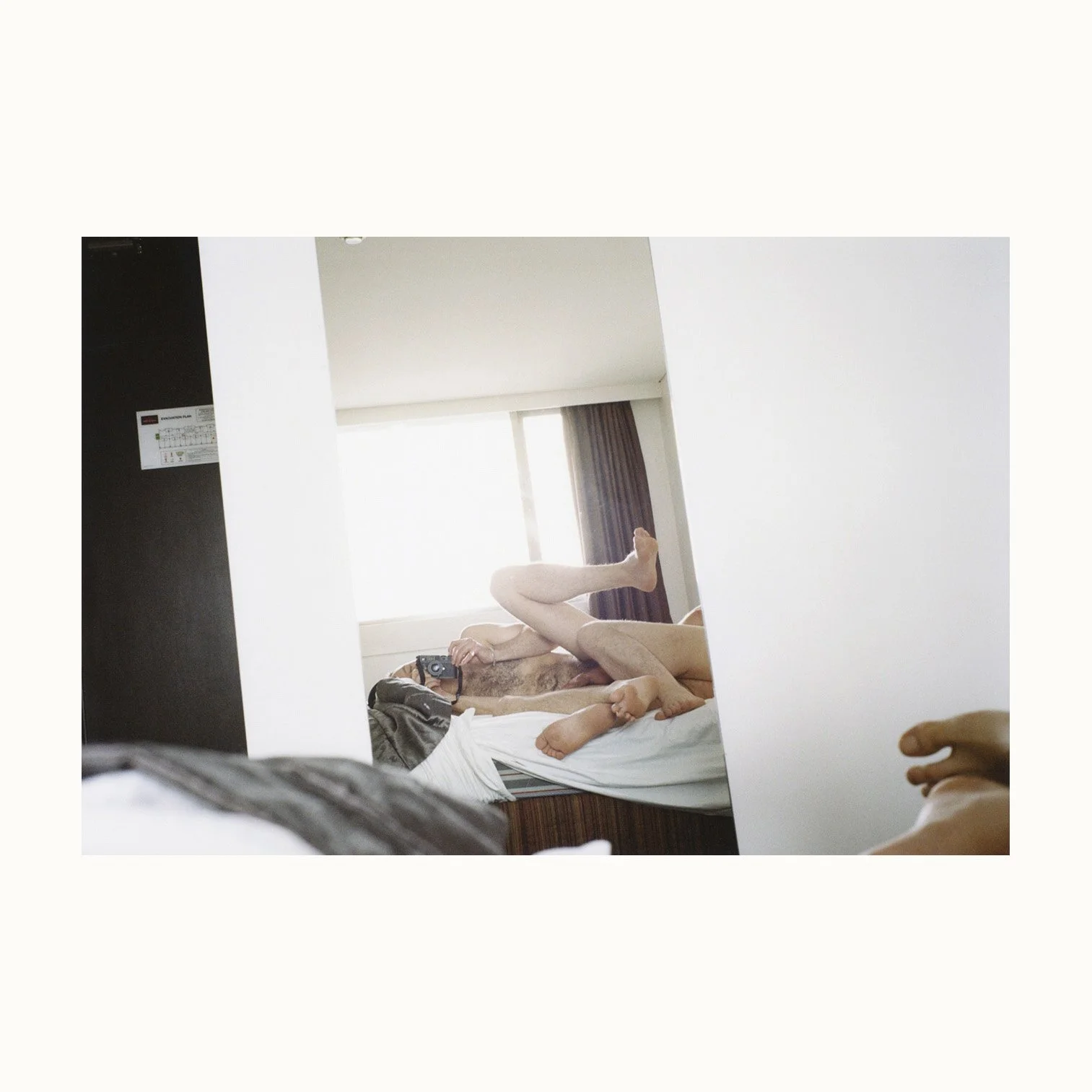
Paul Knight
Chamber Music, 2009 - . archival inkjet print . 56.6 × 85 cm (image) . 100 × 100 cm (print) . Ed 2 + 1 AP
AUD 11000 incl GST
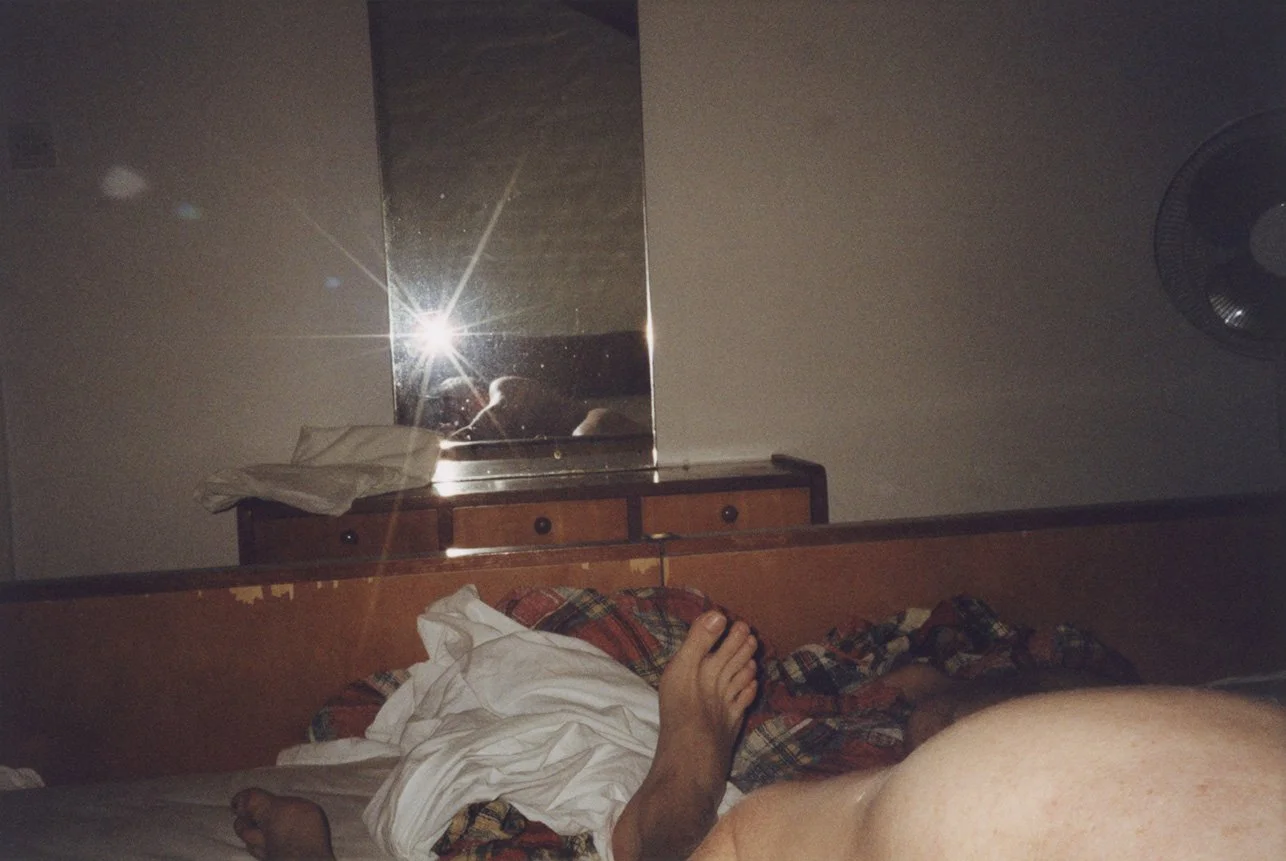
Paul Knight
Chamber Music, 2009 - chromogenic print . 8.7 × 13 cm (image) 28.7 × 29 cm (print) . Ed 1 + 1 AP
AUD 3000 incl GST